




Roman mooring posts cut into rock
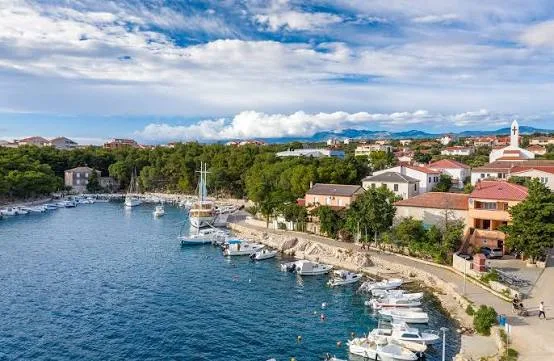
Mandre bay has sheltered ships sailing the Adriatic since antiquity. Along the shore you can still see the old bitts — mooring posts carved into the bare rock back in Roman times.
Oštarić Apartments is at Riječka ulica 9 in Mandre, on the south-western coast of the island of Pag. The nearest beach is 150 metres away – a two-minute walk.
Mandre is on the island of Pag, reached by the Pag Bridge (no ferry needed) or by the Prizna–Žigljen ferry. The drive takes about 3 hours from Zagreb and about 1 hour from Zadar.
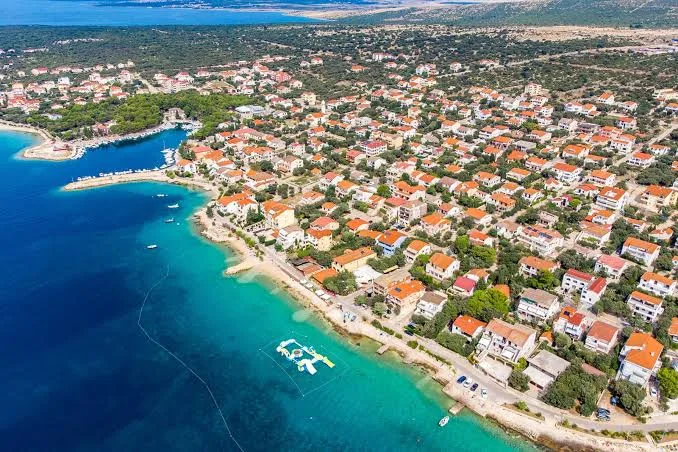
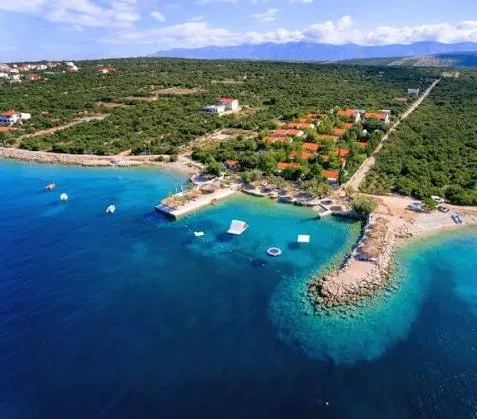
Mandre is a small village in a sheltered bay on the island of Pag, looking out to the open sea and the islets of Maun and Škrda. It has around 400 permanent residents, and its row of family houses is surrounded by pine woods, carob trees and dry stone walls.
The village grew out of a fishing harbour and is known today for family holidays and quiet beaches. From Mandre the rest of the island is easy to explore — Kolan with its cheese dairies, the town of Pag with its salt pans and Salt Museum, and the workshops of Pag lace.
Mandre bay has sheltered ships sailing the Adriatic since antiquity. Along the shore you can still see the old bitts — mooring posts carved into the bare rock back in Roman times.
Until 1991 Mandre was the fishing harbour of Kolan, a village inland. As more people from Kolan turned to fishing, Mandre grew and was then separated as a village of its own.
In 2003 Mandre was named the most beautiful place in the county in the „Cvit za lipši svit" campaign. Mala Mandra beach flies the Blue Flag, the international mark for clean water.
Kolan is the centre of Pag cheese production. It is made only from the milk of Pag sheep, which graze on sage and immortelle, with salt the wind carries in from the Velebit Channel.